Welcome to 2020, the year of the great new pandemic. Whether it was created in a lab in Wuhan, China, or it just suddenly appeared in a market there, it is here, and we have to deal with it. I left my job in a very public market a little over a month ago, and my husband left his job in construction about 2 weeks ago. We found ourselves in a quandry. What now? What do we do with ourselves and being jammed up at home? Every sneeze and cough is a fear factor.
Where we live, we are so far removed from everything. We already live a fairly reclusive life. We are living in a resort, a few hundred feet off of the Snake River, but for most people who live in the city limits, it must seem frightening. When we go into town, there are people wearing masks, and it all seems so strange. It’s like we plunged into an episode of “The Twilight Zone.”
Where do you find yourself in this direst of times? We found ourselves staring at our porch steps and realizing they need repainted, staring at our solar lights and knowing that they needed to be replaced, staring at our lawn and knowing that it needs serious upkeep. So, that’s what we did.
Mike, my husband, went the extra mile and wired a bunch of exterior outlets around the entire house so that he could plug in the leaf blower anywhere. This worked out to be a big plus for me when I sanded the 3 porch decks and steps with my palm sander to prep them for paint. I finally finished today when I repainted the front porch steps. It’s a beautiful color that almost matches perfectly to the body of the house paint.
Amongst other things, we have found the time that we didn’t have before to rehearse a bunch of new songs for gigs that we don’t have. There is nowhere to play music at, and no one to play for. Regardless, we have had ample time to rehearse two or sometimes three times a week. I have also found the time to read, “To Kill A Mockingbird.” It is a book that I have been meaning to read for years and suddenly find that I have the time to sit down and read it, I’m about 1/2 way through.
We have watched a boatload of movies that we never would have taken the time to watch before. Some were good, and some were bad or strange. Welcome to the current status of our ability to watch movies at home. We have played tons of games of cribbage and trivia, Uno and 10,000. I have also dropped myself into cooking again. I am cooking all sorts of recipes that I have never had the time to do before. I am also working on a painting that I have been stalled on for months. Who knows? I may finally finish it. That is only going to happen if I can get myself away from the Prime Video series I have jumped into, thank you to BBC and “Silent Witness”.
At the end of the day, we are good. This has been a strange esoteric example of how people would react to being homebound when they are not used to it. Only those in the government really know what’s truly going on and we are at their whim and control. What a lovely feeling!
Where are we at tomorrow? I feel lost. I feel like everything is surreal. Any day now, I am going to wake up and realize that this has all been a bad dream. I will suddenly be aware, have my job back, Mike will be at work, and everything will be back to normal. Fortunately, things are slowly returning to normal, whatever that is. Mike is going back to work on Monday, I am back to working on the magazine, the house is in great shape, and all is well.
I hope this article finds you all well and happy. I hope it finds you spending much needed time with your family. I hope it finds you doing those projects that you haven’t done, but you said you would for months or years. At the end of the day, I hope it is drawing you closer. Have a peaceful day from Idaho Gazette.
Pythian Castle, 30 E Idaho St, Weiser, ID Photo by Jaz Fagan
When you travel down Idaho Street in Weiser, you come upon this beautiful castle. It seems like you have walked out of a dream and stepped into an Arthurian legend of Camelot and Knights of the Round Table. It’s the Pythian Castle, which used to house the Knights of Pythias, Star Theater, and a mortuary. It seems almost surrealistic. This building at 30 E Idaho Street and another building at 8 E Idaho Street make up the Bee Tree Folk School.
Masonry work and stained glass windows commissioned by The Knights of Pythias Photos by Jaz Fagan
The Pythian Castle was commissioned by the Knights of Pythias and was completed in 1904. The amazing masonry work is beautiful and seems daunting. Each stone block was quarried from Sand Hollow, Idaho, and carried over in wagons by Roberts and Sheff. The masonry work was done by Hamilton and Reader Masonries of Weiser. This architectural masterpiece will stand the test of time.
Great architectural structures at Pythian Castle Photos Jaz Fagan
Pythian Castle had been what is now Star Theater, which was moved across the street. Going upstairs into the Grand Ballroom of Pythian Castle, you see theater seats, a movie screen, and a projector room. Many have argued that the theater wasn’t originally at the Pythian Castle, but here is proof positive that silent movies were indeed watched in the Grand Ballroom.
Movie seats, screen against the amazing ceiling , and projector holes for Star Theater. Photos by Jaz Fagan
This is where the Knights of Pythias had their ceremonies and rites. The cub scouts probably met there as well. The Knights of Pythias donated their beautiful Grand Ballroom for silent movies and different community endeavors. There were 3 skeletons found in the Grand Ballroom, a real male skeleton, and a real female skeleton, as well as a plastic baby skeleton. There is some thought that they may have been used in the rites of the Knights of Pythias.
The building is owned by The Weiser Architectural Preservation Committee at this time. Dennis and Sandra Cooper hope to take over ownership of Pythian Castle before their four-year lease agreement comes due.
The Innovators; Dennis and Sandra Cooper
Dennis and Sandra Cooper Photos by Jaz Fagan
Dennis is a well-known musician, sound technician, and computer tech. Sandy is an executive director of the Old Time Fiddlers, entrepreneur, and is self-made. They are both art patrons. They have been heavily involved in the Weiser community, supporting the Weiser Fiddle Festival for years. They have been working on the Bee Tree Folk School for about 20 years. It had been in the back of their minds, and circumstances being what they are, the dream was finally brought into fruition around 2017 when they got their NPO set up as a charitable and educational entity by Sandy.
Thanks to endowments from Roderick Emerson Simpson and the Robert Vassar estate, they have a collection of historical music manuscripts, a collection of Nigerian African art, beautiful pianos and organs, and many other wonderful artifacts that will comprise the museum portion of the school. They have also received a beautiful collection of glass bottles and antique furniture that make up the Simpson-Vassar Collection. This huge collection set the school back from opening by about a year and a half due to the urgency in getting the music instruments in place and getting items on display.
Various artifacts from the Simpson-Vassar Collection at the Bee Tree Folk School Photos by Jaz Fagan
The Simpson-Vassar Collection is huge! When Dennis and Sandy received the endowment, they had no idea how large it truly was. It included 9 inventoried collections and 7 collections that had not been inventoried yet. The inventories had several rare antique pianos, organs, music manuscripts, Nigerian African Artworks, Nigerian African artifacts, antique glass bottles, furniture, paintings by Violet Simpson, as well as rare books. There is no way to put this entire collage on display at one time, so the Coopers, with help from the members of the board, and volunteers, will rotate the inventory of the museum by changing the displays out from time to time.
The collection of pianos, organs and other musical instruments. Photos by Jaz Fagan
A Vision and a Dream Realized
Sandra and Dennis have a wonderful vision of what we would think of as a community college, but nothing about the Bee Tree Folk School is typical. With all of their hard work and stamina, they are seeing the dream become a reality with their soft opening on January 17, 2020. They will host a jam session at the school located at The Hive with musicians from all over southwest Idaho.
The Bee Tree Folk School is based on Frederik Grundtvig‘s theory of a folk school. He was a Renaissance man in the 18th and 19th centuries. He was a very forward thinker, and many embraced his ideologies. While he didn’t open a school of his own, many followed his philosophies of a learning center without tests, without exams, no passing grades, just a simple meeting of the minds where a person can grow and learn different crafts such as culinary arts, sewing, playing music, and learning various other crafts while in a setting with other like-minded individuals. The concept grew and became the folk schools of today.
Sandy and Dennis have a Grundtvig-like concept where people within their community of all socioeconomic circumstances can meet in a center of learning. You may not know what your passion is in life, but you can find it at the Bee Tree Folk School. It is nestled between two different buildings that will host different programs and events. You can become a musician, an artist, a culinary expert, a linguist, or anything you set your mind to do. There are no limits as to how far you can go.
There is a class on conversational Spanish already in place with an instructor and students. The Bee Tree Folk School isn’t going to be one particular thing, not just traditional arts. There will be classes offered that teach gardening, sewing, husbandry, and much more. The entire concept is about enabling people to be creative, doing something with their hands, and seeing a positive result at the end of the day for themselves and the community.
There are scholarships available for people in the community that don’t have the means to pay for classes. These scholarships are sponsored by various members of the Bee Tree Folk School board and members of the community. Bee Tree Folk School is partnering with the local after school programs and offering classes and various programs for different age groups.
They have a full kitchen at Pythian Castle, as well as a full kitchen at The Bee Hive. An individual can learn culinary arts and basic cooking skills. There is also a sewing machine set up where Sandy is teaching sewing skill classes. The concept of getting back to the roots of survival in an age of computers and the internet is endearing and vital. Learning to do something beyond pushing or swiping a button on a phone or computer teaches people that we are not mindless monkeys. We can do something with our hands that is far beyond the age of computers, things that are vital to our survival. These skills also teach us to communicate in a cooperative environment.
The kitchen at Pythian Castle, Bee Tree Folk School. Photo by Jaz Fagan
The really beautiful thing about a local folk school is that classes are offered at a very affordable rate for everyone and a subsidized rate through scholarships for people that can’t afford to go to such a prestigious school. People of any age can go in and try many different things until they find their niche.
For some, their niche may not be art, it may be culinary art, or it may be crafting, it may be woodwork or pottery. We are constantly reinventing ourselves and evolving. We build something and then completely reinvent ourselves. Every avenue you explore in life gives you a different set of tools that may lead you down a street that you never thought to explore before. The Bee Tree Folk School offers people the opportunity to explore different avenues of thought, no matter what their age, be it 2 or 102. It was surely a vision that Robert Vassar would have greatly approved.
Robert Vassar
When Roert Vassar was sent to Nigeria to integrate IBM computer systems, he probably never realized how beautiful the experience would be culturally and how much it would affect his future endeavors.
His lifelong friend, and companion, Roderick Emerson Simpson took amazing photographs of their life there. He was a lover of life and took great photographs that captured his day in and day out realities in Nigeria and other far away lands.
Photos by Roderick Emerson Simpson Photos by Jaz Fagan
Paintings by an unknown artist Photos by Jaz Fagan
The Vision Begins
Dennis and Sandy already have the layout planned for both buildings. In the Pythian Castle, there will be an art studio that will comprise some of the more messier skills such as pottery, jewelry making, ceramics, and painting. These will be at the back of the Pythian Castle on the main floor. At the Bee Hive, there will be individual studios for music lessons and the main stage for jam sessions and performances by local and renowned musicians. Dennis will also be opening a recording studio at the Bee Hive. They also have a huge library at the BeeHive where patrons can come in, relax, and read.
They already have some classes up and running, but bigger and better things are yet to come. There are open jam sessions planned for the Bee Hive, classes of every nature that you can think of at either the Pythian Castle or the Bee Hive, and endeavors to improve the community and the people within that community. If you know of someone who would like to instruct a class or participate in a class please contact (208) 414-2667 and leave a message. They will return your call ASAP. You can also visit the website at Bee Tree Folk School.
No matter what you want to do in life, there are people to assist you on your journey. Whether it’s a path of enlightenment, a path of understanding, or an epiphany. If you look closely, some people have been put in your path for a reason. Dennis and Sandy are exactly those types of people. You have no idea why you met them, how you met them, but one day the light goes on, and it makes perfect sense. Dennis and Sandy Cooper are two of the gems of Idaho. I have a closing photo I want to share. It is the photo I took of the stained glass window. What’s ironic here, isn’t so much the photo, it’s the concept of being on the inside looking out. This is how we should view life. There is beauty outside of us if you only seek to find it. Cheers!
Beautiful stained glass window at the Pythian Castle from the interior Photo by Jaz Fagan
I have always been fascinated by anything old, whether it’s old barns, old bridges, or old houses. When I visited Pioneer Cemetery for the first time, I was enamored. It’s beautiful, peaceful, and it’s a place that should be paid all due respect. This isn’t my first time out there. I taught myself how to use a big SLR camera loaded with black and white film for the first time right there about 20 years ago.
I have visited quite a few old cemeteries, including Gibbonsville Cemetery outside of Carmen, but there is something special about Pioneer Cemetery, also known as Boothill Cemetery. It’s located outside of Idaho City by about a mile. All of the graves are scattered about in the pine trees and sagebrush. Some of the trees are huge and intimidating. The graves seem so small and insignificant, but they are not. Every grave has its story. Some have been forgotten and have no grave markers or simply “unknown” markers in the place of the name of the occupant. Those occupants have been long lost in the annals of Idaho City history. It has a sad, but, interesting history.
Unknown Graves Photos by Jaz Fagan
According to records, there may be over 2,000 graves located in Pioneer Cemetery. Only the first 200 graves have been identified, and most didn’t die of natural causes. When Idaho City had its Gold Rush in 1862 they used this cemetery to bury the dead. According to what I have read, it sounds like the miners were greedy bushwhackers. That is entirely possible. I tend to believe that the pioneers and miners were so far removed from everything that disease, weather, and other factors played a part in the early deaths, especially when it came to women and children. We have no way of knowing for sure. I think most of what I have read is rather exaggerated. I think some writers want to make it sound like an episode of “Gunsmoke” with gunfights in the street or a ghost story.
Children’s Graves
Children’s Graves, left to right, Anna Galbreath Rothwell d. 5-25-1881, Infant Daughters d. 1-1880 and 5-21-1883, Umphrey P. Linville b. 9-24-1889 d. 2-27-1892, James L. Orchard b. 11-15-1881 d. 1882, James H. Prince b. 5-8-1908 d. 5-3-1911. Photos by Jaz FaganWalter Henry Runyon d. 8-23-1873 and Anna Ainslie Runyon Photo by Jaz Fagan
European Immigrants
European Immigrant graves, left to right, Peter Donahue b. 1829 d. 1908 of Ballygawle, Tyrone, Ireland, Wilhelm Lass b. 9-7-1835 d. 4-14-1905 of Germany, Peter Ourey d. 11-27-1905 of France, Melanie Rotthier b. 1819 d. 12-20-1898 of Belgium, William Stierman 7-18-1828 of Germany Photos by Jaz Fagan
Such is the case with E.L. Bretall, a native of Stelin, Prussia, Germany. He had come to Idaho City to seek his fortunes. He fell extremely ill and was coughing up blood. February of 1878 was a bad winter. The snow was deep, and getting around was nearly impossible. His partner since 1865, Damase Frenette, had tried diligently to nurse him back to health and awaited medicine that never came due to the weather. Mr. Bretall passed away on Sunday evening, February 17, 1878 at around 9 o’clock. After about 36 hours Damase made a makeshift coffin out of wheeling planks. He then placed the coffin on snowshoes and took the body about 40 yards from their cabin and buried him in the snow. This was no easy task as Mr. Bretall was a large man in stature, standing over 6 feet and very well built.
Mr. Bretall knew he was dying and asked his friend and partner to make sure he was buried in the cemetery at Idaho City. Damase promised him that he would see to it and that he did. Six men took Mr. Bretall into Idaho City, against the protests of the miners at Rabbit Creek who said it was impossible. They exhumed the body and took it through an incredibly steep ravine by using snowshoes to get his body out. It was very difficult as they had to wait for the snow to crust over on the top before they could even contemplate bringing him out of Rabbit Creek which is 10 miles out of Idaho City. He was buried on February 22, 1878, in Pioneer Cemetery. He was only 57 years old. The Idaho mountains take their toll for miners seeking gold.
E.L. Bretall’s Headstone Photo by Jaz fagan
There are the upper echelon graves. You can recognize them by the big headstones with the wrought iron, or wooden fences, such as Mary (E. Abbott of Wisconsin) Pinney, the wife of James Alonzo Pinney. Mary died in Idaho City at the tender age of 26 before they could even have children and James Pinney went on to become the innovative mayor of Boise. He opened the first mercantile in Idaho City, as well as the first theater. These were destroyed in two fires in 1865 and 1867.
He relocated to Boise, opened up a pretty little glass-front book store on Main Street, and remarried a year later to Mary Agnes Rogers. They had 5 children, of whom 3 lived to be adults. He was elected as the Mayor of Boise in 1881. Mayor Pinney was instrumental in placing the new city cemetery above the bench and raised money with the city council for a proper road and a bridge going to the cemetery that was situated on Morris hill above a floodplain.
There was a serious outbreak of diphtheria in 1883, and James Pinney renovated the sewer system. He also gave money to allocate sidewalks at his own expense. He also helped with the road structure in Boise making it better for automobile drivers. He loved theater and built the elaborate Pinney Theater on Jefferson Street in Boise. He was active in the policies regarding the unions and women’s right to vote. This secured his reelection as mayor. He is considered to be the father of modern Boise, and his home, which was located about 3 blocks off of Main Street at 1229 8th Street, was where one of the first sidewalks was poured. He retired from the Mayor’s office in 1907. Mayor James Pinney passed away at his theater after a sudden illness on February 14, 1914.
Mary Pinney’s Headstone who died in 1869 at the young age of 26 Photo by Jaz Fagan
One death by a gunfight that was recorded in regards to Idaho City happened in Silver City, Idaho in 1868 over a claim between J. Marion Moore and Sam Lockhart. J. Marion Moore, who Mores Creek is named after, had come to Idaho City with the second prospecting party during the Boise Basin gold rush in October of 1862. He had changed his name from John N. Moore (AKA John Neptune Marion Moore) due to an incident in Mariposa, California that was under mysterious circumstances. He was very careful to conceal his identity.
While in Idaho City he became a leader in the community. He had been a council member to the Washington legislature and was watching over mining interests. He worked hard to divide the Washington Territory along the Cascade Range border which failed. In 1862 he hooked up with George Grimes, D.H. Fogus, and Moses Splawn. They met up in eastern Oregon and headed to the Boise Basin where there were Indian reports of gold being found. They headed out, and Fogus discovered a minuscule amount of gold, about 15 cents worth, in what is now Centerville. This was the beginning of the Boise Basin mines. Moore led a party and helped found Idaho City on October 7, 1862.
After this, he headed back to Washington to serve his second term as a council member from Walla Walla and Shoshone counties. He fought again to have the Washington mining districts separated from other territories. This pushed the Idaho Territory annexation ahead in March of 1863
Moore moved back to southern Idaho and was expanding his Boise Basin mining business building up capital for other ventures. The Owyhee quartz mines had been established, and Moore was making a fortune. He began financing his money into mines in the Owyhees along with his old friend Fogus. By the spring of 1864, they had a controlling interest in two very promising quartz mines in the Owyhees, the Morning Star Mine, and the Oro Fino Mine. They were keeping a staff of miners and made money hand over fist. It was very lucrative for the partners.
Things eventually soured, and Fogus was placing his investments elsewhere. By 1866 their debts outweighed their income. They fell into bankruptcy on August 14, 1866, and couldn’t pay their bills. It had failed miserably and threatened collapse to all who lived in the Owyhee vicinity. These were dark times.
In 1867 the mines bounced back and returned into production with a purchase from the miners of the property from Moore and Fogus. Moore was busy with his mine on War Eagle Mountain at this time at Ida-Elmore properties. He helped negotiate the sale of the Morning Star and Oro Fino Mines. They were having a battle over ownership about a ledge with Golden Chariot, which was owned by Hilary “Hill” Beachy and George Grayson, which was located at a different locale, but in the same silver vein. There was open fighting in and above the mines between both companies involving the miners. Things were exploding, and both camps were armed at all times. A bitter mining war ensued between a strike-breaker Sam Lockhart and J. Marion Moore. It would not end to anyone’s benefit.
The Owyhee War
At this point, the Governor stepped in to try to end the violence and the disputes. He said it was an embarrassment to the state and it had to stop regardless. It was unconscionable the way that both parties were behaving and not in good faith.
They thought they had the dispute settled by then-Governor David W. Ballard, who had ordered a cessation of all violence at the mines on March 28th. He threatened them with punishment if they did not desist according to the law. Ballard Dispatched 150 Army troops from Fort Boise that were due to arrive on April 5th to alleviate the conflict. Deputy U.S. Marshal Orlando “Rube” Robbins left Boise immediately to serve the papers. He arrived on March 29th and by that Monday the Golden Chariot and Ida-Elmore had come to terms and reached an agreement. They signed deeds and drove stakes into the properties setting the line.
When Chief Justice of the Territorial Supreme Court, John R. McBride, arrived on April 1st he thought things were calm and there seemed to be rejoicing. It didn’t last. That night in April, Moore got into a drunken brawl with Sam Lockhart over a mining claim in Silver City.
Moore had been eating dinner at the Idaho Hotel with friends when heated words were exchanged between Lockhart and Moore. They had both been drinking when they got into it. Moore, who was armed only with a cane, was shot in the chest outside of the hotel and stumbled over in front of the local Oriental restaurant where he died 3 hours later. His friends Ben White and Jack Fisher shot at Lockhart. Lockhart was shot in the arm in front of the Idaho Hotel in Silver City. Unfortunately, this all happened on April Fool’s Day. It would be curious to find out who the bigger fool was?
About 1,000 friends attended Moore’s funeral in Idaho City. Lockhart died from the amputation of his arm after gangrene had set in causing blood poisoning. He passed away on 7-13-1868.
Headstone of J. Marion More Photo by Jaz FaganThomas Graney 9-29-1840 12-8-1923 Photo by Jaz Fagan
Not all of the stories of the graves are as interesting as the ones I just shared with you, however, each grave has its story, and many have been lost to time. I love it up there with the moss growing from the wood on the grave fences, the intricate wrought ironwork around some of the graves, the beautiful marble work of some of the headstones, some that are barely legible over 100 years later.
There are unusual markers on some of the headstones that tell you that a Mason or an Odd Fellow is buried there. They are marked with a compass or three interlocking oval circles. Thank you to Danielle Lewis at Boise Valley Monument for clearing up the Odd Fellows Symbol for me.
Mason and Odd Fellows Grave Sites, left to right, Jess Bradford b. 7-15-1836 d. 3-11-1892 from W. Va, Francis Cooper b. 9-15-1826 d. 9-30-1901 From Wheeling, Va., John Henry Eggers b. 1833 d. 1894, John Foster d. 6-1911 age 76, Anna G. Galbreath b. 10-1-1803 , Raymond S. Galbreath b. 1888 d. 1905 Son of W.G. & Sade Galbreath, Bridget Gorman d. 11-7-1878 age 35 Wife of John Gorman, George Hansen d. 5-15-1919, Thomas S. Hart d. 5-11-1908 9-27-1879, Francis Headen b. 7-7-1824 d. 3-30-1890, Alexander Orchard b. 9-10-1836 d. 10-6-1888, Mahlon B. Moore b. 3-28-_ d.1-1-1885, Anna H. Otten d 9-24-1886 Wife of William Stierman, “Papa” Mathew K. Ryan d. 3-31-18-6, Charles H. Seekins d 1-1-1907, Martha J. Thomas d 12-24-1904 and Charles M. Thomas d. 12-27-1907, Tregaskis Family Plaque, Claus Van Thun d. 11-17-1903, Gilbert J. McGreath b. 1-13-1898 d. 5-2-1953 PFC HQ CO 158 Infantry WWI, George Eli Zapp d 11-6-1887 Son of Mathias & Mary Zapp, Mary Elizabth Zapp d. 4-4-1882 Daughter of Mathias & Mary Zapp Mathias Zapp d. 3-19-1876 Photos by Jaz Fagan
There are new graves going in all the time. One of the really pretty ones that I found was this headstone carved with a Celtic Tree of life and the Celtic knotwork caught me by surprise. It’s very intricate and very well carved. Kudos to the monument maker!
Lavelle Headstone Photo by Jaz Fagan
There’s also the unusual headstones that either don’t have any markings or are unique. I had to do some research to understand the headstone for Jacob U. Hidy. I found out that the insurance company paid for the headstone that they designed themselves. They put the name of their insurance company on it. Carved on the headstone are the Latin words, “Dum Tacet Clamat”, which translates to, “Though silent, he speaks.” It was called a WOW stone and was made by the insurance company. At the bottom, it says, “Here rests a woodman of the world.”
The insurance policies were offered by Woodmen of the World Insurance, and the gravestones were quite elaborate at one time. The widows never paid a dime for the headstones, but the company was allowed to put whatever they wanted on the headstones. At one time they were quite elaborate and looked much like natural logs and trees. This one is an example of the simpler headstones before they began scaling back due to it being cost-prohibitive.
Jacob U. Hidy 9-11-1870 1-30-1911 Photo by Jaz Fagan
By far, one of the most unusual unmarked headstones I found was this one that was carved out of a tree and looks like a person holding a poker hand. I concluded that the person buried there liked poker or was a gambler. There wasn’t a marker, so I had no way of knowing who was buried there. Nevertheless, it is a cool grave marker!
Unmarked Grave Photo by Jaz Fagan
Pioneer Cemetery is quite beautiful. It is well cared for by the Idaho City Historical Foundation. They gladly accept donations to aid in the upkeep of the cemetery. If you go to see the cemetery, please be respectful. People have vandalized the cemetery. They have taken some of the wrought iron fencing and some of the headstones. The wrought iron fences and gates were all made by The Stewart Iron Works, now located in Kentucky. Linda Ackerson, from Stewart Iron Works, tried hard to help me find out information about how the beautiful wrought iron fences and gates got to Idaho City, unfortunately, that information is long lost to the annals of Idaho City history.
Photo by Jaz Fagan
Vandalizing a cemetery is wrong on so many different levels that I don’t even know where to start. This is by far one of the most unique cemeteries I have ever seen. I hope it stays intact for years to come.
Catharine A. Moore d. 12-08-1902 Photo by Jaz Fagan
Allen and Leigh Evans In Their Kitchen Showing Me the Recycled Floor Joists Photo by Jaz Fagan
I met up with Allen and Leigh Evans, owners of Huston School, on July 29th, and they were kind enough to speak with me for about an hour. They showed me around the old schoolhouse, and I was truly impressed with all the hard work they have put into revitalizing a historical treasure that might have been lost had it not been for them.
Huston School History
Huston School is located on Homedale road outside of Caldwell near the Pride Lane intersection. It is located at the entrance to the Sunny Slope Wine Trail. The school and town were named after Ben Huston who homesteaded Huston, Idaho in 1911. It used to be quite a busy little burg as it was the main point of shipping for produce in and out of Canyon County.
At one time there was a streetcar that took the children from Huston to Caldwell for high school until 1924, Deer Flat Merc for shopping which stayed open until 2005, and a post office. Huston also had three churches at one point. The streetcar made the trip three times daily until the advent of the automobile making the streetcar obsolete.
Huston Post Office
About the Owners and the Journey to the School That Once Was
Allen and Leigh Evans are native Idahoans. They are both teachers that moved to the Portland, Oregon area. Allen was a music teacher, and Leigh was a stay at home mom until she undertook the wonderful challenge of teaching special education for autistic children. After their four girls had grown and left the nest, Allen and Leigh decided it was time to spread their wings.
Leigh’s father was a band director his entire life and was Allen’s main instructor in college. Allen plays trumpet and guitar, and Leigh plays the oboe. All four of the daughters all played different instruments, so they are a very musical family.
Allen Evans photo courtesy of Allen and Leigh Evans
There is so much to see inside the remodeled interior. Everywhere you look, there are cool antique pieces of furniture that have been lovingly hand-picked by Allen and Leigh to enhance the appearance of this beautiful home. The kitchen is situated upstairs, and the panoramic view from the tall, sunshine lit windows, is amazing. Everything was still in process when I interviewed them, and it wasn’t quite finished. From my perspective, everything was very lovely. The kitchen is a cook’s dream!
Leigh Showing Me the Kitchen and Rack That Pulls Out Photos by Jaz Fagan
Leigh is a collector and two of the hanging cabinets in the kitchen were obtained from a Restore in Boise. There are the cool spice rack and also an old seed cabinet with many drawers like an apothecary chest that is really neat! The seller would put their seed in the drawers and the customer would pick their seeds.
Allen With a Drawer From the Seed Cabinet Photos by Jaz Fagan
Allen’s grandmother that went to Huston School married Homer Skelton. They homesteaded a place over on Lonkey Road about three miles from the school where he had a walnut orchard. When he got older, he had his son, Allen’s father, take his walnut orchard down. He rough sawed the lumber and placed it in storage. Fifty years later it was still there and Leigh and Allen had some of the walnut fashioned into an island in the center of the kitchen. The legs are from the supports from their porch in Oregon.
The Walnut Island Salvaged From Storage Photos by Jaz Fagan
A Very Cool Pull Out Shelf! Photo by Jaz Fagan
Allen and Leigh have become experts at salvaging. The floor joists that held all the old knob and tube wiring were recycled into window sills in the kitchen and art room studio. One night Leigh had come out to check on the property, and there were people there looting some of the old knob and tube wiring. The guy asked Leigh if she wanted it to which she replied, “Sure since it’s already mine.”
The Birds Have Flown, What Now?
They were discussing retiring in Idaho. Allen’s mother passed in 2014, and they had gone out to The Orchard House on Sunny Slope Road to eat. Leigh had wanted to be closer to the Snake River, and they were talking about retirement. Leigh had wanted to be in this neck of the woods so to speak, so they decided to drive around the area. They saw the school and turned around to get a closer look at it.
Leigh had said, “I could so live in that place.” To which Allen replied, “Are you crazy?”
The following summer, they were at The Orchard House eating with their family. Allen’s mother, Margaret, was in the car with them, and they decided to take her by the school. She told them that her mother had gone to school there in 1908 when the school opened.
Leigh got interested in the place, especially after she found out that Allen’s grandmother had gone there to school. In the summer of 2015, Leigh and a friend started doing research about the school on the internet and found the owner. Leigh called him up and found out that the school was being sold at auction. It had been bought and sold a few times.
Leigh finally got ahold of the new owner in August or September of 2015 and asked if they could go look at it. He put a price on it that was too high at the time. Every time they came during spring break or Christmas Allen and Leigh would come and look at it.
“You can’t even wrap your mind around what it would take to do it.” Leigh said, referring to refurbishing the old school.
Very early in November of 2015, they got a phone call out of the blue from the owner. He told them he wanted to sell the school. He told Allen and Leigh that he was going to list it in a month, but he wanted to give them the first crack at it. He would sell it to them $1000 cheaper if they wanted to get it.
They called the bank, and only had a three-week turnaround, and the bank said that was very tight, but they would see what they could do. They used a home equity loan and paid cash for it around the first of December 2015. At the end of the day, they had their house on the market in Portland, and they ended up with no payment on the school. It was a Merry Christmas indeed for the Evans’ family.
They showed me documents from the school, including a document from Allen’s great uncle. They have report cards, awards of completion, and other old records. There was a list on the Teacher’s Report to Parents that were the children’s responsibilities that I found to be quite cute. Some of the records had unfortunately been lost in a fire.
Old Documents Photos by Jaz Fagan
Allen’s father-in-law lives with them and is helping on the remodel. He went to do some research for Allen and Leigh. There aren’t many records about Huston School. Allen thinks this is because it wasn’t a high school, which has yearbooks. Huston School was an elementary school which didn’t have yearbooks.
Leigh’s dad was doing some research, and he went down to the fire department in Caldwell. He asked the secretary if they had any records for Huston School when the fire burned up the school in 1991. She took him into the Chief’s office, and there was a great photo hanging on the wall. It was the Chief’s first fire. At the time they had apartments in the school and they think that oily rags in the laundry room were the cause of the fire.
Photo Hanging in the Caldwell Fire Chief’s office of the Fire at Huston School in 1991 Photo courtesy of Allen and Leigh Evans
Leigh’s Father Photo by Jaz Fagan
Canyon County School District Forms
Before 1918 there was a wooden structure where the school now stands, and it was called Fisher School. It was named after a man that had several children, and he wanted them educated. He provided the materials for the building. The land was set aside and designated school property when they laid out the whole valley.
They erected the new school in place of the wooden structure. It opened in 1918 and that’s when Allen’s relatives went to Huston School. There were 14 of these small schools scattered all over the valley. They were first through eighth grade, and eighth-grade graduation was a really big deal. The graduates didn’t have a place to go to high school. They had to petition either the Caldwell or Nampa High Schools to be able to go there. By incorporating they were able to build a high school of their own, Valley View.
A School in Transition
Valley View eventually built West Canyon School, which is a mile from Huston School. Allen and Leigh met a man who was going to school at Huston when they closed it, Ron Platt, who is a local farmer. They pulled the truck up, and the kids carried their desks out of the school and put them on the truck and drove it over to the new school. When Ron attended Huston School in 1973, it was a fourth through sixth-grade elementary school. They closed the school, and at some point, it was sold at auction.
In 1984 or 85 a family bought it at auction and turned the old school into apartments. There were two apartments in the basement where the family lived. They had cut out some windows, including two where the courtyard is. The windows weren’t supported properly when they were cut out. Allen and Leigh cut out a window in the kitchen, and it, along with all the other windows, had to be steel-framed.
The original window openings were kept, only the window glass is new, and Leigh made all of the curtains. They had hung in their house in Oregon for 25 years. She used a copper pipe for the curtain rod with creative flair. The back door is the original door, and it was surrounded by windows, however, the engineers made them rebrick the windows for safety’s sake. The brick on the inside that is exposed is from the original building as well.
Kitchen Windows Photo by Jaz Fagan
After the fire of 1991, when the roof was destroyed the school was abandoned. It had been bought and sold to people that were planning to do something with it. People had gone in and cleaned up parts of it, including all the burned-out materials. Allen and Leigh have taken 37,000 pounds of debris to the dump with their cargo trailer.
On the front of the building, you can see a semi-relief 1918 sign. The numeral 1 is missing, so it reads 19 8. They found out where the 1 ended up. It sits at The Chicken Dinner Winery. Allen had asked them to give it back to them, but they declined. They hope one day that the winery will decide to return it to its place at the school.
They did the first bit of work on the school in spring break of 2016. They had dreams of a residence and event center and went to work on it steadily and thoughtfully. They have a blog that gives a detailed account of the extensive work that they have done at https://thisoldschool.wordpress.com/
They have an exposed brick chimney in their bedroom, and you can see where the original wood-burning stoves once stood. There were four classrooms on the upper level, and there were four wood-burning stoves. There had, at one time, been coal heat. They think the first fire occurred in 1926 when the report cards said the school had a fire. They got away from the wood stoves and went to a coal-burning system. There were radiators, and the two tanks are still in the school. They cut one in half for planters in their courtyard, and the other is designed to catch rainwater.
Major construction started in the fall of 2016. Allen and Leigh had moved in the weekend before Christmas in the fall of 2018. It has been an absolute labor of love for them both. Leigh has often said that it is 100 years old and she wants to see it last for another 100 years and give it new life.
They have always been aware that a lot of people have very private and personal memories of the school. It isn’t unusual at all for people to stop in, ring the doorbell and ask about it. They always bring total strangers through their unique home all the time. They have been told so many precious stories.
A Labor of Love and Fond Memories
It wasn’t only a school, where the children spent eight years of their life it was also the center of community events. The farm ladies used to meet there. The postmistress from Huston had told Leigh that, and Leigh asked her if they still met. She said that they do, so Leigh told them to come back to the school for your meetings.
A daughter of one of the principals of Huston School and her husband stopped by. They had gone to school together and are still married after all this time. They also had a visit from the previous owners that had changed the school into apartments. Their mother had recently passed and they were overjoyed that the school was being so lovingly cared for.
Two brothers, one now living in Washington and the other in Arizona had stopped by. They had gone to school there, and one brother told Allen and Leigh when they showed him the basement, that he had held a little girls hand for the first time in that basement. As one can see, there are very important connections and fond memories associated with Huston School for some people.
The Basement and Leigh’s Dad Working Photos by Jaz Fagan
The lights around the house are all modern and the library is quite lovely. It has a hidden door behind one of the bookshelves that go into the master bedroom. I think the courtyard is by far my favorite part of the house. It reminds me of something you would see in Venice, Italy. The only thing missing is a Gondola passing by the open-air windows with a Gondolier, passengers, and a little man playing a romantic song on a stringed instrument.
Photos by Jaz Fagan
Leigh’s painting room is one of the last rooms they are finishing upstairs. It has all the marks of being inhabited by an artist. Leigh’s paintings are very lovely. They remind me of Thomas Kincade, the artist known best for his paintings of scenery dappled with beautiful light. Here is one that she is currently working on.
Photo by Jaz Fagan
The entire Evans family is artistic and creative, so it’s no surprise that this school turned into a home is so amazing! If you would like more information, or to arrange a tour, please contact Allen and Leigh at https://thisoldschool.wordpress.com/. They have so many stories, and I could write many more paragraphs. For now I just want to thank them for their time and patience.
Roundhouse Band performs music from a variety of genres using bluegrass instruments including stand up bass, guitar, mandolin, and banjo. Duet, trio, and quartet harmonies are integral to their sound.
They work out interesting and unique arrangements that are of special interest to the band members. Bluegrass, folk, southern, and classic rock, as well as a capella, gospel, and country blazing instrumentals, and original compositions all appear in the band’s repertoire.
They are on stage now at Weiser Fiddle Festival until 8 pm and tomorrow, Wednesday June 19th, from 7-8 pm. Please check them out!
I first met Robert Crist, better known as Brother Bob or BBQ Bob, depending on who you ask, in 1999. He is a bass player that has played with us on some of our Celtic music. Cindy Emery is a sweetheart with golden locks of blonde hair and a darling mandolin player that plays with a side project called Uke*A* Ladies. They are working together these days in a project called “Brief & Breezy.” Brother Bob plays in a side project called “The Nocturnals.”
“The Nocturnals” feature John Cleary on guitar and vocals, Robert Crist on bass and vocals, and Cindy Emery on mandolin and vocals. They are all from the Boise area. The music selections are written by John Cleary and a large selection of 70s San Fransisco folk rock gleaned from college radio stations of that era.
John Cleary
Brief and Breezy covers songs from Tin Pan Alley, Ragtime, and popular jazz tunes from the 20s to the 70s. They focus mostly on Broadway Tunes from the 20s. The members are Robert Crist and Cindy Emery.
Robert Crist played bluegrass with Rocky Mountain Ozone Band and The Hills Brothers band from 1975 to the present. From 1979 to 1982 he played in a casino circuit with Stir Crazy and from 1982-1985 he played with Lewiston Civic Theater Orchestra. After that, he did a solo act from 1985-1991. He played with The Tourists from 1991-1996.
He continued playing in various blues bands with Cindy Lee and Streetwise, Neighbor Dave and The Kings, The Solution Brothers, The Blue Rays, and Nocturnal Wedge from 1999-2006.
He soloed from 2006-2012 and joined up with Freudian Slip from 2005-2015 and Best Lyres from 2014-2018, Nocturnals 2016 to present, and lots of solos and duets in between. His main genre is the 1920s to 1940s Tin Pan Alley, jazz-pop (Broadway, Movie) music and San Fransisco Rock. He failed to mention that he played with CYMRY in the 2000s doing Celtic and classic rock and blues.
He’s an amazing musician and Cindy is very lucky to have him. He is beyond a bass player. He does great lead guitar and is very talented. He is one of my best friends and an amazing musician!
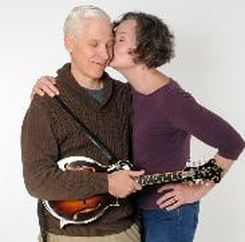
Jaz and Mike have been performing together since 2002. Jaz started out on the violin playing in the orchestra with classical music. She switched up to guitar when she was 15, but has always been a lead vocalist. They will perform on Saturday night at Weiser Fiddle Festival from 8-10 pm June 22nd.
Mike has always played guitar in one form or another and took a break when he had kids, Tasha and Michael. Now he is on board with his lead breaks and rhythm tracks. They found each other by accident. They have been playing together for 17 years.
The style Jaz writes is more in the line of Celtic/Folk/Blues. In fact, if you ask her, she says it’s confused. It’s not what anyone would write, they are weird chords, coupled by strange progressions, just different chords altogether. “I don’t quantify what I write. It’s unusual at best. It is not A G D, and E it’s more like C minor 7, and different because I write in 11ths also. It’s off the wall writing. I guess that’s what makes me different as a songwriter.”
Jaz does all of the song arrangements and a majority of the songwriting, but Mike is really the icing on the cake. His lead guitar adds so much to the final product. He has a Mark Knopfler feel to the way he lays in his guitar. He’s an amazing lead guitar player.
They have a new CD out this year that they just finished up at Cunningham Audio with Don Cunningham who has been the producer for Jaz since 2001. The CD is titled “Dragonfly” and features 13 songs, 10 of which are originals. Her daughter Kira did the artwork for the cover of the album. The album is a compilation of Jaz’s original songs covering about 20 years of songwriting. Some of the songs are remakes from her solo album “Sublime Evolution” that was released in 2002.
Jaz and Mike have had the honor to work with some really great musicians through the years including Doug Slagle on mandolin, fiddle, and banjo. They released an album a few years back called “The Celtic Collection and Other Stories” which includes many songs from her Welsh background and has songs that are sung in Welsh like “Dacw Nghariad,” “Llongau Caernarfon,” and “Llosgi Yn Fflam.”
Jaz Fagan and Doug Slagle at Gelato in Meridian
After they play Saturday night at Weiser Fiddle Festival at Memorial Park they are headed to Malad to perform at The Welsh Festival for a two day engagement for an eisteddfod where they will be performing Welsh songs as well as the originals off of the new album. Jaz’s great grandmother and great grandfather came over from Cowbridge, Glamorganshire, Wales and settled in the Malad area in the 1800s. Her great grandfather was a fiddle player and used to drive her great grandmother crazy with his fiddle playing on the back porch.
Right after that, they are headed to her birth town of Salmon, Idaho situated in Lemhi County to perform at her Uncle Gary’s bar called The Lantern. They will perform for 2 nights on July 19th and 20th. Right after that, in August, they are scheduled to do a performance for Snake River Correctional Institution. This will be their 3rd performance there. This time it’s for an employee picnic instead of for the inmates.
We would be remiss if we didn’t mention some of the great players we have had the honor to work with including, Bobby Day (passed away), Don Cunningham, Doug Slagle, Kevin Day, Allan Sluder, Josh Day, Marc Carlson, Brother Bob Crist, Jim Bateman, and Mike Camario, just to name a few.
What can you say about Gary Eller? He is a busy man! He’s handling Chicken Dinner Road, Slim and Jay Unplugged, The Story Tellers, The Old Farthings, and Idaho Songs Project. This adorable man is 72 and doesn’t show any signs of stopping anytime soon.
For the Idaho Songs Project, he travels all over the stage for Idaho Humanities Council and Idaho Commission on the Arts. He presents programs of historically based Idaho songs and collecting early songs that are pre-1923. He was recently inducted into the Wetzel County Hall of Fame, his birthplace, for 2 CDs and booklets about Wetzel County, West Virginia.
His dear friend John Larson is one of his Idaho heroes. John Larson is a pure Idaho musician, he is very colorful, and an amazing friend to Gary. He is also a historian from Owyhee County and helped Gary with books and CDs about Owyhee County.
“The Old Farthings is a group of “seasoned” friends who have played American roots music for 100s of years (combined) and love the plunk of banjos and banjo-like instruments of all descriptions. Some would say that the group name derives from not being worth a cent, but we don’t care, we cherish our second Tuesday afternoon gatherings at Crescent Brewery in Nampa where we can tell lies, drink beer, laugh, and play songs. We play songs from old acoustic and pre 1970 hillbilly country music traditions, with a heavy emphasis on instruments that have a banjo head on them.”
“To be a Certified Old Farthing, (COF), you must be at least 70 years old, play a banjo-like instrument, and know 100s of old songs, preferably humourous or a bit “off normal.” We do have some probationary and auxiliary members who do not fit these criteria.”
The full members are Gary Ellis, from Pickles Butte, Idaho, Charley Simmons from Boise, Idaho, and John Larson. The probationary and auxiliary members include Marv Quinton, Jay Fromlath, Doug Jenkins, and Legs Alice.
“The Idaho Songs Project was started in 2006 for the purpose of finding, interpreting, and preserving songs written before the radio era (before 1923) about Idaho’s early people, places and events. Such songs provide unique glimpses into the culture of early Idaho from the bottom up. To date, more than 200 songs of this type have been documented, almost always from archival sources such as university special collections and museums. Hundreds of more songs that are of less interest to the Project mention “Idaho” but are more recently written than 1923, and generally are so nonspecific they could be about almost any western state. We are constantly on the search for songs of early Idaho that are unknown to us.”.
The Storytellers are a newly formed Treasure Valley, Idaho acoustic band that specializes in what bluegrass pioneer Bill Monroe called “true songs.” The group consists of four seasoned musicians who are well known in the southwest Idaho acoustic music scene.
The members include:
Gary Eller- Has played banjo and guitar since childhood in West Virginia and currently is banjoist for the popular regional progressive bluegrass band Chicken Dinner Road. He also is a prolific singer/songwriter and noted authority on pre-radio era songs of Idaho and West Virginia, some of which enter the repertoire of The Story Tellers.
Gary Eller
Becky Blake- She is an Indiana native. The Storytellers are blessed with her wonderful voice, powerful stage presence and deep, broad musical experience developed during her former career as a professional singer.
Becky Blake
Lloyd Blake- He is a talented multi-instrumentalist who plays mandolin and guitar in The Storytellers. He also plays bass and is an expert traditional percussionist. Lloyd grew up in New York City.
Lloyd Blake and Becky Blake
Jay Fromlath- He is a southern California native who played bass in the Ash Street Ramblers bluegrass band for many years. A late musical bloomer, he started playing at age 46. Jay also sings and plays guitar.
Jay Fromlath
You can catch The Old Farthings on Tuesday, June 18th at Memorial Park in Weiser during the festival from 6-7 pm and be sure to catch Storytellers from 8-9 pm on June 18th. If you miss that show, Storytellers will have another show from 8-9 on Wednesday, June 19th.
I haven’t had the honor to meet Ken Worthington, but I have talked to him on the phone, and he is the most honest and sweetest man I have had the honor to meet. He reminds me of my Grandpa Tuff, who was a fiddle player. He is absolutely a great addition to the Weiser Fiddle Festival. There is a wonderful amount of knowledge to be learned from him.
Ken Worthington was born in the cold month of December 1935, in Gannett, Idaho. He attended one-room country schools from 1st to 6th grade. He graduated from Bellvue High School in 1953. Ken went on to the University of Idaho and graduated with two BS degrees in Animal Husbandry and a minor in Education.
Ken bought his roommate’s guitar and drove him batty (not really) learning chords, etc…He is self-taught by listening to tapes, other players, and using instructional books. “I have never yet failed to learn something when playing in jams or one-on-one. You never stop learning.”
He started teaching in 1958 and retired in 1996. He joined the Idaho Old Fiddlers and played with them until they broke up. At this point, he joined up with Fiddlers Inc., heading them through the present time.
“We host Mannie’s Jamboree the second Saturday in July.” This is in honor of the fiddle legend Mannie Shaw. “The Idaho State Fiddle Contest the second weekend in April. Everyone is welcome to play and participate in all of their activities!”
You can catch Ken and friends Thursday, June 20th, at Memorial Park from 2-3 pm at Weiser Fiddle Festival. Be sure to check him out it will be unforgettable.




 Idaho Gazette